Volcanoes, Economics and Avatars
The difference between the two in my case boils down to two different approaches to scientific learning. The regulatory authorities were using computer models based on historic data to simulate what would happen if a plane was to come into contact with the ash. From a scientific perspective, it is worth mentioning that volcanic ash is in essence microscopic glass. Therefore if it would come into contact with a jet engine, it would melt immediately. As one would deduce, it would then solidify in the engine leading to pure catastrophe. Hails storms are bad enough, imagine boeing storms across continental Europe.
On the other side of the scientific argument were airlines who posited that they should undertake test flights so as to ascertain the real level of danger posed by the ash clouds. This was an old fashioned approach to science, where observation of real time data would lead to a clear conclusion. The pragmatist in me rooted for the latter approach. The IATA C.E.O. Mr. Giovanni Bisignani was a big advocate of this approach. Luckily some flights have been approved and slowly the world is travelling again.
So where does the economics and finance come in. After studying economics in depth, after sleepless nights trying to not fail advanced econometrics exams, after days in the library reading on stock covariances and correlations, I am of the opinion that it is all misplaced. I struggle to find the practical and real application of most of this issues in real life. It makes me think of the saying "If you give a man a hammer, everything to him looks like a nail". One could seriously make the argument that economists are more interested in applying their knowledge in calculus when studying the maximisation of consumer surplus, than they are in really understanding consumer surplus. A lot of the models have failed miserably in the past and even more so during the last global crisis. Modelling human behaviour is simply impossible and predicting it is even harder. However, economists have made this their life aim. From a statistical perspective, when so many models have failed, we should conclude that we should drop the models, just like statisticians drop variables that are not significant.
On the side of finance, it would take a really strong discussion for me to get the point. Warren Buffet always says that an investor should read annual reports and attend AGM's rather than study formula's with Greek alphabet terms. One example of the irrelevance is when CFA professors teach the Optimal Portfolio Theory. For a better understanding of my opposition to this you can send me an email, but the concept is way beyond lay man understanding. However, it basically makes unrealistic assumptions and even makes more unrealistic conclusions to develop a model that should eventually make money. No wonder the world is up against wall street. Maths should not be used to generate formula's so as to make money. If the Long Term Capital Management crisis of 1998 hasn't taught us anything then nothing will.
I guess where I am getting at is that too much energy is spent on the wrong things, defeating the essence of economics where we should maximise utility. In my view, the curriculisation (new word) of a branch of knowledge has lead to its deterioration. Let's make these two branches of knowledge more practical rather than more theoretical. Theory should be a precursor to knowledge rather than the knowledge itself. Knowledge and observation are the roots of the tree of theory, however nowadays finance and economics theories are like the mountains in avatar, they just float supported by nothing much. We should take the approach of the airlines and not the regulatory authorities.
Looking east? Think twice
Most economic articles that chronicle or critique Africa's slow pace when it comes to economic development, often draw parallels with the East Asian tiger economies. These are Malaysia, Singapore, Thailand, Indonesia and so on. In all honesty, readers of this blog will realise that I have also joined in the foray and given the parallels.
These parallels are pertinent in that the East Asian economies started their growth from the same level as the African one's did. They are therefore good candidates for comparative analysis as one can see where we African's went wrong. We can analyse why our tourism numbers are so low given similar or sometimes even better tourism sites, we can analyse why our macro economic environments are so unstable, why our business costs are so high, why we do not have running water and many other factors. It is true that most of the tiger economies are in a far better position that we are in all of these measures.
The Eastwards mentality is becoming so entrenched in our minds, especially when the gains of western style capitalism haven't spread out to everyone. Trickle down economics has not worked, maybe our canopies are too thick and thus the rain hits the canopy, sticks there and later evaporates so as to condense elsewhere. It could be said that this eastward mentality is just another form of anti-capitalism (socialism), in just the same vain as tree hugging is. I have some friends from Zimbabwe who are such staunch supporters of their governments plans to look eastwards when it comes to development, that they can even get violent when one questions the rationale behind it. They often point out to western imperialist designs as to plausible reasons as to why we should favour the east. However as Shakespeare wrote "a rose by any other name would still smell as sweet". The east and especially China is just as imperialist as the West is, maybe just that they are honest about it. However, before I digress this was not the point of the post.
My concerns are that the admiration towards East Asian economies could be misplaced. The socio-political environment here in Malaysia and in most of the surrounding countries would simply not work in any African country. There is a very patronising and paternalistic approach from government towards their citizens. The people are like drones who shall neither speak out nor think for themselves. "Why should they, we give them all they want", seems to be the approach from the leaders. They stay mostly locked up in the government state (Putrajaya in the case of Malaysia) and looked towards like some all knowing demigods. The level of conformity is at times almost tangible. When watching TV a lot of the content is controlled, there are no satirical comedies both in print and visual media that poke fun at the governments. After all that we as Kenyans have fought for in terms of democracy and freedom of speech. So much so that a generation has grown up with people like Gado, Redykyulass and the late Wahome Mutahi who often ridiculed powerful figures in government, are we ready to give it all up, all in the name of looking east?
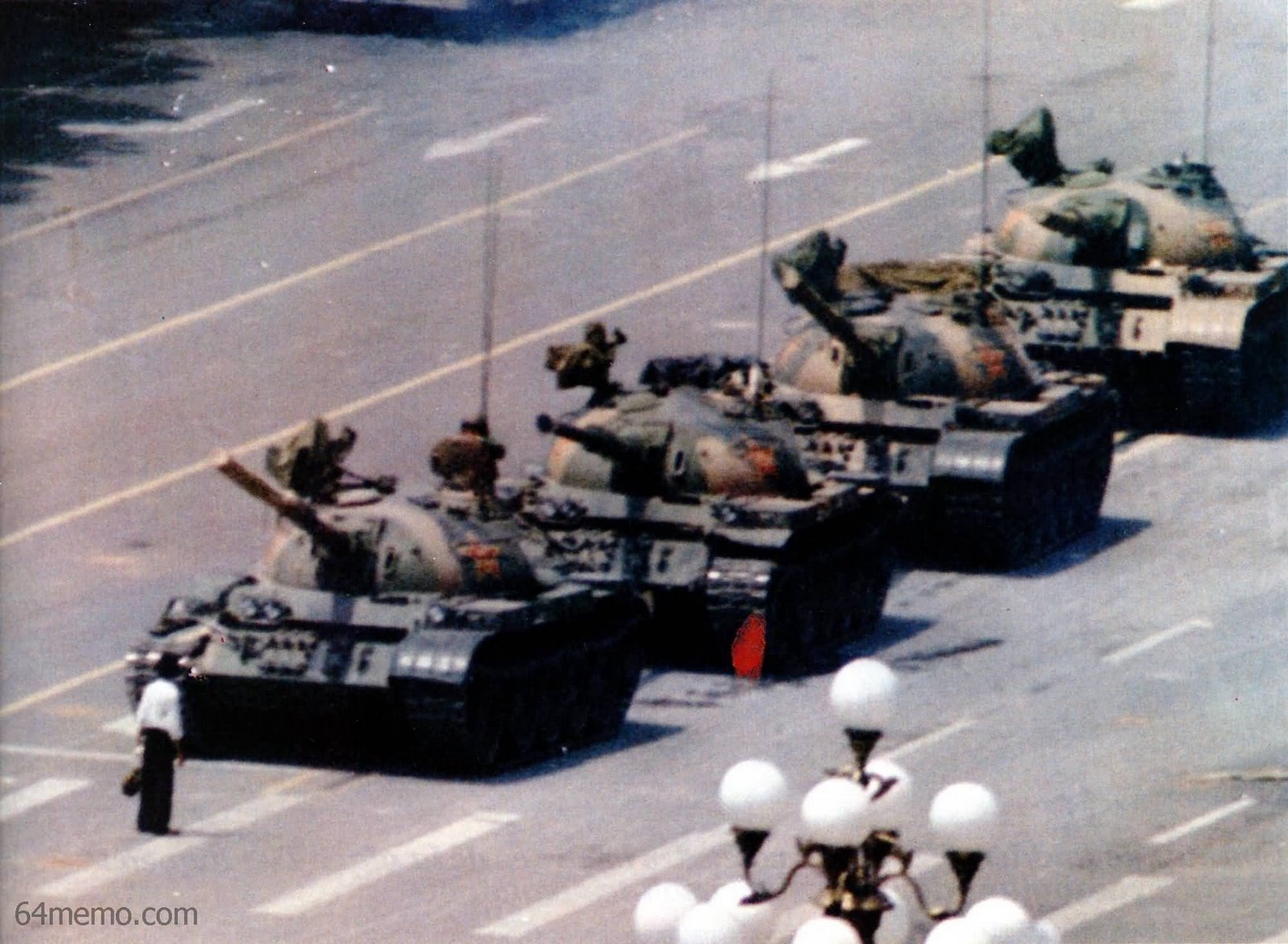
As my deceased intellectual mentor and role model Milton Friedman (yes, I do set myself lofty standards) would say; "the biggest downfall of the intellectuals is that they undermine the intellect of the common man". The fact is that a self sustaining capitalist and democratic society, in my view and as is attested by history should allow people to pursue their own happiness. In any means possible so long as they do not infringe on their neighbours rights. This is pure speculation, however, the Tiananmen Square crisis of the late 80's according to most historians arose due to the new found wealth of the Chinese that needed expression through increased personal freedoms. This is amongst the many historical examples that underpin the argument that freedom and wealth go hand in hand. In a previous blogpost, I start off with a quote from Adam Smith that also argues about freedom and wealth. Our aim then as a country and generally as a continent is to find a growth formula that starts off with a liberal political base. As hard as this may be, it is the only option. Looking east will mean that we give up a great deal of our basic freedoms, a situation that is untenable in both the short run and the long run.
My F1 adventure
The unfortunate case of Makmende
I am a tad bit late on commenting on Makmende, the current hero of Kenyan internet. He has in record time become a hero and a celebrity not only in Kenya but across the world. All thanks go to Jim Chuchu and Mbithi Masya who are the masterminds behind this project. His acclaim has even gotten as far as the Wall Street Journal in a blog written by Cassandra Vinograd. I am sure that even if the creators of Makmende were extremely confident in their abilities, they wouldn't have even in their wildest dreams, imagined that Makmende would be this big. Their Youtube video above has been watched over 53 thousand times and their group on Facebook has over 30 thousand fans. On Facebook the cult status embodied in Makmende has been made grown with jokes such as "Makmende is the only one who calls Orange customer care and asks for Oranges", "Billie Jean is Makmende's lover" and one of my favourties "Makmende speaks in CAPITAL LETTERS".
I was a big follower of this group up till some shrewd or shameless people started posting their blogs and websites and using Makmende's name in I dare say vain. Therein I saw that if ever there was a perfect example of what I have been waffling about in the Future Capital Series, this was it. As if it had been designed in a Petri dish just for this purpose.
I am sure that Mr Masya and Mr. Chuchu have gotten rights to Makmende and all that is embodied in him. If not then they should. Image rights and all. However, as I have been saying all along, there lacks a well functioning "Property rights" mechanism to protect their hard worked for intellectual rights as the owners of "Makmende". T-shirts, Jerseys, Mugs, Posters and banners will be made bearing Makmende's image. A great deal of money will be made on the back of Makmende's popularity but very little of that cash will go to Mr. Masya and Mr. Chuchu. It is a sad case. In Kenya it takes 418 days to enforce a contract and the costs of enforcing it take 47.5% of the claim. This means that the two gentlemen will be heavily disincentivised from pursuing any justice that they seek. They will thus invariably not get the most from their investment. This would probably not be the case in most developed and East Asian nations where the property system protects an individual's rights.
Future leaders of this country who are probably Makmende fans should use this as an incentive and work towards improving the legal system so as to ensure that property rights are protected so that more people can come up with things like Makmende and brighten up our lives. I would however want to congratulate the two gentlemen for their superb effort and "Just a band".
Images courtesy of Just a band and Makmende's official Facebook page
An Economist's guide to dating
Speaking of girlfriends and boyfriends, I will give my opinion on this matter through this post. I know most readers are used to research intensive economic pieces that discuss big issues, but I guess one has to explore his tools to find different subject matter. Sometimes economics or economic concepts can be used to analyse different factors other than just economic growth. Dating is one of these other areas or branches where human interaction which is often incentivised can be analysed through economics.
As someone who has burnt his fingers on a few occasions while dating, it is also of personal importance that I do this. Too bad most of the times theory remains just that; theory. Practice is the hard part. Well enough of pontificating about this.
Relationships are weird things, a lot of the time people do things that you would normally not expect them to do. Typical cases like those where the proud, headstrong girl dates someone who abuses her, where the casanova who nobody thought could be tamed ends up being literally owned by the most unassuming girl or even where there is a perfect match and suddenly things go haywire and you're left wondering; what's the point of this all?
I would like to think of these anomalies or the whole beastly creature of relationships using three concepts which tie in perfectly, well at least in my head. They are, assymetric information, regression to the mean (mean reversion) and probabilities yes, good old probability. An introduction to each would be the polite thing to do wouldn't it?
Information asymmetry simply occurs when one person knows more than the other, it is often the building blocks of a good profit in business as the seller knows more about the product especially its pricing and thus can make some good money off the buyer. Regression to the mean just means that things always tend around their average. A cynical example, which I often apply to my self and a certain friend of mine who knows her self is working out. When one goes to the gym, they either gain weight or lose it. However, often is the case that when someone stops working out they go back to their normal look (weight), this is nature's example of regression to the mean. Your body weight will tend around what your genetics, eating habits and other factors dictate it to be. Therefore when you gym, gym regularly and make it a lifestyle rather than just working out for 3 months and waiting another 4 before you get back to the gym. Advice! oh how we often fail to follow good advice, even when it comes from yourself. The last concept of probabilities is more mathematical than economic, but it has a wide range of applications in economics. The sheer depth and inclusiveness of this concept is central if anyone wants to live life without making many mistakes.
The type of probability pertinent to this post is the relative frequency probability. Let's say that Kenya has been growing at 5% per year for 30 of the last fourty years, then given the same policies, you would predict that the economy has a 75% chance of posting a 5% growth rate next year. Your using the relative frequency (amount of times it has happened) to predict the chances that it will happen again.
So what's the point of all this when it comes to dating. It's simple, most people are constrained by the fact that asymmetric information coupled with a lack of understanding of the natural concepts of regressing to the mean and relative frequency probability, lead to bad choices when choosing who to couple with. An example can be given, let's imagine that I find a girl called Ayn, she is the most beautiful girl ever and I am smitten from the get go. At first, I know nothing about her, all I know is that she's pretty. From the beginning there is a strong degree of asymmetric information. The point is to try and reduce the degree of asymmetry, usually by going on a few dates, talking for long on the phone, meeting her friends and all these other social conventions. Even after all this the asymmetry is still strong. I still don't know about her as much as she does and will never do, but with time the degree of asymmetry will fall.
The problem comes in here, as humans we tend to ignore the other two factors after reducing the asymmetry to bearable levels. When the internet started becoming a strong factor in our lives in the 90's people were overcome by a new era type of thinking, we thought our economies would grow forever and our growth rates would be double digits. However, this hasn't happened because raw human intelligence hasn't increased. When you meet a girl/guy who has irritating habits, say Ayn really likes to smoke and drink and I am really not a fan of smokers and drinkers. However, Ayn really likes me and she wants to make a good impression by quiting. The little ego in me, as hyper rational as I may be, will take this as true and ignore the fact that her habits have a huge chance of regressing to the mean. In my egotism, I ignore simple reality and think that I am an agent of change. Most people make this stupid mistake by living on hope rather than reason. Eventually regressing to her mean she will start smoking again. She may genuinely quit but often that's a long shot.
The second mistake is to underestimate the effect of probability. Let's say that of all the workers in silicon valley, 70% of them are software engineers, if someone describes to you that person A, who hails from Silicon Valley is a right brained person i.e. very creative, likes listening to music and attending art galleries, most people will guess person A to be an artist. However, to stand a higher chance of making the right guess, you should guess person A to be an I.T guy because 70% of Silicon Valley residents are software engineers. Now how does this apply to relationships, rappers usually talk of "turning a (insert farm object) into a housewife", relative frequency probability if applied to Ayn will show that she has cheated on all her past boyfriends and slept with quite a number of people. Added to this she has also dumped all her boyfriends just after valentines day. You should guess that she will also cheat on you and dump you after valentines day. Just saying. Again "new era" thinking clouds our judgement and is often the case when "virtuous" and headstrong women end up dating cruel and abusive boyfriends. In the woman's head, she thinks that she will usher in a new era and bring and end to his abusive ways. Hubris if ever an example was needed.
Therefore we should avoid making typical dating mistakes by thinking probabilistically as well as understanding that stuff always reverts to its mean. However, there's always the chance of making the right but most unlikely guess. After all they say it's better to have loved and been hurt than not to have laughed at all. Well, it's up to you. I'd rather stick to trying to make sense of it all and cover my bases by sticking to the above concepts. What do you think?
Images thanks to graphicshunt.com and "for the love of food"
Distorted Civil Service Pay
I remember talking to a colleague of mine at university back in South Africa about my possible moves after I graduate. He asked me the question “state or private?” in other words would I work for the government or would I head out towards the private sector? This question baffled me as I could not ever imagine myself being a civil servant. As a Kenyan, the things that come to mind when I think of the civil service are corruption, bad suits and glaring inefficiency. Why would I want to be a part of that? The notion was preposterous.
From this, I was therefore very surprised to find that the government wage bill as a percentage of both GDP and government expenditures are very high compared to both our East African neighbours and the East Asian Tiger economies, the latter ever so important because we hope to become a middle income country by 2030.
Now on to the data available so as to get a clear picture of what is going on in Kenya. The best way that one can compare the wage bills in different countries and regions is to standardise the data by either measuring the wage bill as a percentage of GDP or expenditure. In Kenya, the government wage bill as a percentage of GDP is approximately 8.4%. As a percentage of total expenditure, this is about 31%. This statistics are ever more glaring when one considers that transfers to universities and the military are not included in the wages that the government reports. In middle income countries, the wages are 6.0% and 22.1% percent of GDP and expenditures respectively. In East Asia the wages are 4.6% and 15.1% and in high income countries the wages are 5.9% and 15.6% of GDP and expenditures respectively.
Kenyan civil servants are clearly well paid if one follows the statistics given by the IMF. However are they? If they are, why then do we see droves of civil servants leaving their jobs and opening stalls in the CBD? Why are they all migrating to the private sector after getting their government sponsored education? This is ever more conspicuous when you consider that the number of workers in the civil service has dropped on average by 4%, this according to both the IMF and the World Bank. Clearly then there is a something incongruous between the rising government wage bill and the diminishing civil service.
When we peer through the data further, we see the missing link. There it is raring it’s ugly head, the simple truth that the high ranking civil servants are extremely well compensated with wages that have outpaced inflation. The middle and lower ranking workers are left behind as the rich get richer. The “mbuta” as our prime minister affectionately named them have been lining their pockets at the expense of their subordinates. According to the IMF, the top to minimum ratio is 118:1. This means that the top officials earn 118 times what the lowest earners are earning. This compared to Uganda, Tanzania and Botswana where the ratios are 25:1, 20:1 and 30:1 respectively. This is really a shocking figure. Added to this the top to median ratio is 53:1 meaning that the highest earner makes 53 times the median income in the service. Again compared to Uganda, Tanzania and Botswana with ratios of 7:1, 5:1 and 4:1, the picture becomes pretty clear and even infuriating.
Our pay structures do not reflect productivity but are more so reflections of status in an elitist government. The thousands of university graduates who would join government as cadres and technocrats are not compensated well enough. Their pay does not reflect their productivity and thus the sharpest minds in Kenya will never ever dream of working for their country. The engineers who would have drafted plans to deal with the rising costs of energy are abroad working for big engineering firms, our economists who would have been implementing plans to steer our economy forward are playing the stock exchange and adding little value to the economy. Our lawyers who would be clearing the backlogs of cases pending at the high courts are company secretaries at the big firms.
The government needs to break with an elitist approach to civil service and have productivity based compensation packages. We need to attract our brightest minds to the government if we are ever to dream of having a robust civil service. Hopefully the draft constitution will deal with this through the mooted salaries and remunerations committee. Until then it is distortion galore at the civil service.
Hernando de Soto: Capitalism at Crossroads
If you prefer a short video to understand the Future Capital Series, here it is:
Search
About Me
- Samora
- Kenyan economic and financial research analyst.